
Thoughts on performances and travels since 2018
Welcome to John’s musical journey
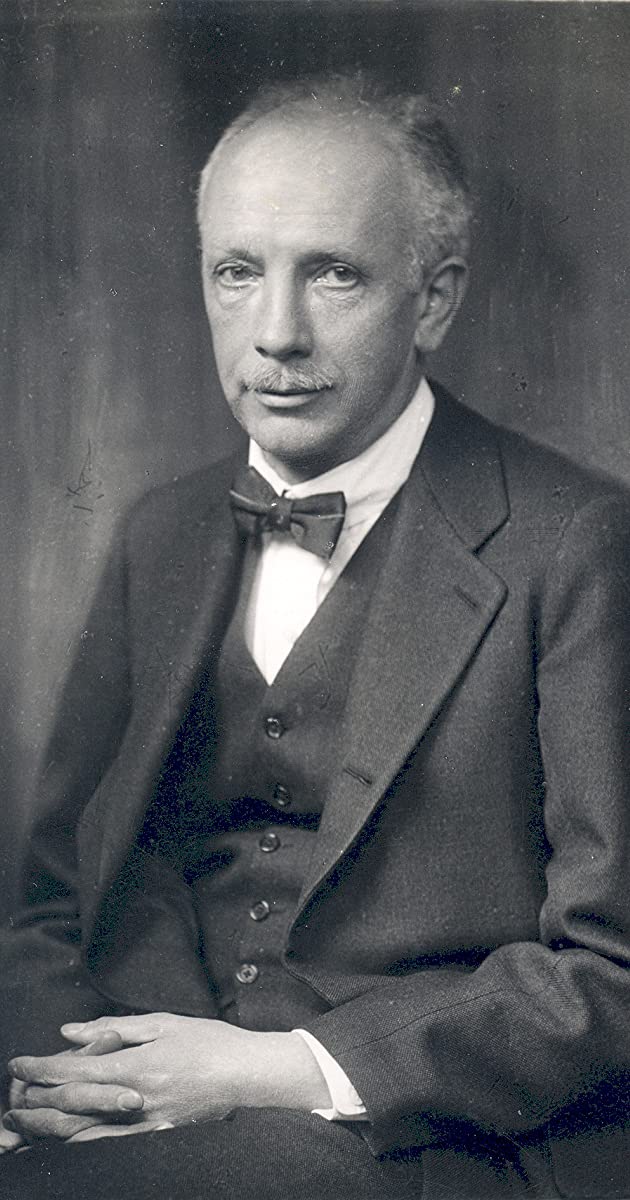
Favourites
Desert Island discs? Mine are (order not important):
1. John Sheppard In Media Vita
2. Bruckner 7 – Adagio
3. Elgar 2 2nd Movement
4. Wagner Die Walkure Wotan’s Farewell
5. Mahler Resurrection symphony – last 4-5 minutes
6. Schubert String Quintet – 1st movement 2nd tune
7. Wagner Parsifal Transformation Music Act 1
8. Bach B Minor Mass Gloria
My top 10 operatic live experiences (in no particular order)
1. Goodall – Ring – ENO 1973
2. Goodall – Mastersingers ENO 1970
3. Colin Davis/Jon Vickers – Peter Grimes ROHCG 1970’s various
4. Solti/Birgit Nilsson – Tristan und Isolde ROHCG 1971
5. Bayreuth – Jordan/Volle – Mastersingers 2017
6. Mackerras/Janet Baker – Donizetti Maria Stuarda ENO 1970’s various
7. Boris Christoff – Mussorgsky Boris Godunov ROHCG 1971
8. Carlos Kleiber – Strauss Der Rosenkavalier ROHCG 1974
9. Jochum / King/Crass etc – Parsifal, directed by Wieland Wagner, Bayreuth 1972
10. Mark Elder – Parsifal concert performance, Proms Halle 2013
On no 4, oddly I met a Manchester Wagner Society speaker a few months ago who had also been in the standing tickets queue for this, as I had, sleeping out overnight on the pavement, for Georg Solti’s lat performance as Musical Director of Covent Garden. Sleeping overnight on the street is not the ideal way to prepare for 5 hours of Tristan – though at that time Covent Garden was still a functioning fruit market, with lots of cafes, even, pubs open for early-arriving workers (and overnighting opera-goers)
Ten best concerts:
- Otto Klemperer – Mahler 2, Philharmonia 1971
- Sir Adrian Boult – Elgar 1, BBC Symphony 1969
- Sir Adrian Boult – Vaughan Williams 5, BBC Symphony 1975
- Bernard Haitink – Mahler 3, LSO 2017
- Sir Mark Elder – Elgar The Apostles 2012
- Juanjo Mena – Shostakovich 7, BBC Philharmonic, 2016
- Andre Previn – Walton 1, LSO 1971
- Reginald Goodall – Bruckner 8, 1969
- Valery Gergiev – Prokofiev 5, LSO 2011
- Teodor Currentzis – Beethoven 5, Musica Aeterna, 2018
Best new works heard live:
- Britten Death in Venice (1973 – London Premiere)
- John Adams’ Dr Atomic 2010 (?)
- Ades’ The Exterminating Angel ?2015/16
- Turnage Festen (2025)
I suppose it helps to embed memories that nearly all of these performances, one way or another are recorded and accessible to me as we speak via CD or MP3. The Goodall Ring has to be number one – an unforgettable experience. I must have been to one and a half cycles in ?1973 and at least one when Reggie conducted it again in ?1977. I still have the programme booklet and the autographs of most of the cast – Remedios, Hunter, Goodall, Ann Evans etc (although my 70’s and 80’s programmes got left in an attic somewhere and have got lost, sadly……) I also developed some personal connections with the cast – a Wagnerian friend at University lived in Northolt in the next road to Rita Hunter and one day accosted her in Northolt when she was shopping and got to know her and her husband quite well – I was invited to their house once for tea, which was thrilling. My friend and I also went to her dressing room after a Walkure performance at least once. Can’t remember much about what she said but she was very interesting on the travails as well as the pleasures of working with Reggie Goodall. I think she eventually quarrelled with him, which is sad. I also once spent – in the company of other young Wagnerians – a rather inebriated dinner with Alberto Remedios in a motel in South Mimms….And I knew someone who had some sort of repetiteur role with the ENO Ring team, who talked about some of his conversations with Goodall. One thing I remember it being said about Goodall – whether by my friend, or someone else – is that he always established a basic tempo in each of the operas through the use of one motif or melody. Thus for Rheingold, it would be the anvils in the descent into Nibelheim – the pace that he took that would then be the median point from which he determined fast and slow elsewhere. I think in Siegfried it was Siegfried’s forging song.
The Elder Parsifal might seem an odd choice – I think it was the way Elder conducted it (quite slowly, always a good thing where Parsifal is concerned, imho, but with clarity and energy where needed,) partly John Tomlinson as Gurnemanz – quite barky and clearly at the end of his career but with an unparalled understanding of the words, and also simply the space of the Albert Hall, using the upper levels for some of the choirs….And it sometimes quite nice not to have a regie theater performance to have to come to terms with.
The Goodall Mastersingers I saw in the Coliseum – it was probably the 2nd or 3rd opera I saw. It had a wonderfully warm and happy magical glow about the performance – and I was amazed 40 years later or so when one of the 1968 performances at Sadlers Wells came out on CD (it has never as far as I know come out on MP3 for download – I snapped it up!) It is indeed a wonderful performance.
I did also go to Reggie Goodall’s Tristan with WNO, and Parsifal at ROHCG in 1979 and 1971 respectively. The latter is now available as an MP3 download (and I’ve got it!). Unfortunately I wasn’t around – see the para below – for his Parsifal at WNO. He also did an ENO Tristan which I went to..
On my top 10 – yes, it’s difficult – why didn’t I put in the Reggie Goodall Tristan for instance, or some of the Mackerras Mozart opera performances at ENO (though having asked the question it’s probably because the singers weren’t uniformly as excellent)? I suppose that having a lot of the performances in the dim and distant past helps, in that memories and views have solidified – I found it a lot harder to determine which performances in the last 15 years or so might be in the top 10. And occasionally it is a bit shocking when you suddenly hear one of those performances from a legendary past. One of the huge non-opera classical music events of my teenage years was – see above – going to hear Otto Klemperer conduct Mahler 2 at the RFH in May 1971. This was a performance by a man who had been an assistant conductor for Mahler in this work, conducting the brass band, and it felt staggering – I sat in my chair for 10 minutes afterwards, shattered and unable to move or indeed breathe. I still remember the iron grip he gave to the rostrum as he hauled himself upright from his stool for a particularly enormous crescendo. But…recently I came across a recording on Youtube of the radio broadcast of that performance. It was a strange experience to listen to it in 2015 compared to 1971 – the orchestra was all over the place at times (particularly the basses and cellos at the beginning) and it was ENORMOUSLY slow – quite ridiculously so at some points. So what’s the reality – my memory or that recently heard broadcast? An interesting philosophical question – the answer might be ..both? The same applies to the Goodall Ring in many ways – though I recently listened to the end of Siegfried and found it not unreasonably slow…once you get into the sound world you just accept the pace!
In terms of what got me into opera/classical music, I was brought up in a council flat in a large tower block (16th floor out of 24) in London – from the time I was 14 to when I went to University – and in a smaller Council flat before that. I used to stare out of the window of my bedroom (on the 16th floor) as adolescents do, looking out over London and thinking about life, love, the universe etc. I think I liked classical music in a way because it was something totally alien to my parents and therefore something that was totally mine. And it opened my eyes and ears to a world larger than I had ever dreamed of. I first started collecting those rather dubious cheap LP’s (was the company ‘Saga’?) which were notorious for taking legitimate recordings and rebranding them with made-up names (allegedly including someone called Willi Havagest, who is supposed to be Furtwangler), and then selling them off for 11 shillings – I used to buy them with my pocket money from aged 11. I think the first piece I owned was the 1812 overture, but I gradually started adding Beethoven, Mozart and Schubert. Then I started to listen to the Third Programme on my transistor radio. My record player was typical of the period – essentially a black, grey, white and slightly pink suitcase, which opened up to reveal a turntable and stylus holder/lever. There was a switch to select 33rpm, 45rpm or 78rpm and having clicked one of these, off you went to get a vinyl record, clicked the ‘on’ button and put it on the turntable. Very analogue…. The sound was surprisingly good. By the time I was 14 I must have had about 30 records or so, most being cheap label but there were a few ‘better’ recordings bought for Christmas or birthdays. I also kept a scrapbook of musical items of interest, culled from the Radio Times and other magazines I saw. I remember going to one or two other concerts -e.g. with my father to the RFH in 1966 for an all-Beethoven concert conducted by Colin Davis
And, at that time, there were still large public libraries and you could get LP’s on loan from the local library – that’s really my biggest source of musical experience – I’ve never learned to play an instrument or even to read music – so you could gradually get introduced to the major works of the canon. I think the Library I went to in London (New Cross), and the Proms, introduced me to most of the music I still treasure – Bach and modern composers are the big exceptions that the Library/Proms didn’t help me with. The piece I played most, and which still means a lot to me, is Mahler’s 4th symphony plus also Elgar’s 1st – both of which are great for adolescent listeners particularly. But on the opera side somehow from Mahler and Bruckner I moved to listening to orchestral chunks of Wagner. I knew nothing about any other sort of opera but did know that I liked Wagner. When I signed up for a term-long lunchtime opera study group at school, in the 6th Form, run by an opera-mad Maths master, I was hooked! We listened to Monteverdi’s Orfeo, The Magic Flute and then the Flying Dutchman. and I took out records from the Library of the Magic Flute and The Dutchman to accompany the course. And then, excitingly, at the end of the course, we actually went to see the Flying Dutchman, at the Coliseum (1969). I still remembered being thrilled at seeing the phantom ship appearing through the gauze films across the stage……Later a friend of mine did though encourage me to join a choir at university, and I really enjoyed singing the bass lines in the Bach B Minor Mass and the Brahms Requiem – working for weeks with choir and piano and then the thrilling moment when the orchestra joined us, and showed how it all came together. My only moments as a performing musician…………
Get new content delivered directly to your inbox.
 John's musical journey